 Phát hiện hàng giả, bạn trả hàng và nhận thêm
500%
giá trị.
 Giao hàng miễn phí toàn Hà Nội từ
150K
(huyện 250K).
 Đổi trả trong
14 ngày
.

.png) Giao hàng dưới
120 phút
.
Any customer digging into a righteous review before buying typically raises the same question up front: what is this clothing really made of? It’s a valid question, because material selection dictates the outcome down the line — how a garment fits after twenty washes, whether it pills at the cuffs, how it sits on the body on a humid afternoon as opposed to a cold morning. This precise concern sits at the core of Righteous clothing’s identity, treating fabric choice as the foundation of the brand rather than an afterthought added as a footnote to a product description. That approach shows up in the way each piece is constructed, from the yarn used to the finishing techniques applied before a garment ever makes it into someone’s hands.
This article breaks down what goes into we are righteous apparel, why those choices matter for daily use, and how the materials stack up against standard fast-fashion alternatives still widespread in 2026. This piece also covers care, how long the pieces should last, and where the righteous hoodie sits within the brand’s overall range. No filler, no vague marketing language — just the real-world specifics that help someone determine vintage graphic tee whether this brand fits their wardrobe.
Between clothing that lasts and clothing that winds up donated within six months, fabric is the deciding difference. A low-cost, slack-knit cotton blend might seem comfortable on day one, but it loses its form after a few washes and starts wearing thin at pressure areas like elbows and underarms. Righteous clothing brand pushes back against that cycle, favoring denser, densely constructed fabrics that keep from stretching out even with repeated wear. This goes beyond simple marketing talk — it reflects a wider shift in how consumers judge apparel now that fast fashion’s environmental and durability weaknesses are broadly recognized.
Most shoppers underestimate how much weight matters. Fabric weight is usually measured in grams per square meter (GSM), and garments under 180 GSM tend to feel thin and see-through, while anything above 280 GSM starts to feel solid and structured. Righteous apparel generally sits in the mid-to-heavy range, which accounts for why customers frequently describe the pieces as feeling “worth the price” rather than insubstantial. Heavier fabric also holds its shape through drying cycles, meaning reduced need for ironing and fewer hassles on laundry day.
There’s also how material responds when stretched. Stretch recovery — a garment’s capacity to snap back to its starting silhouette after being pulled — is a technical property which distinguishes properly constructed staples from cheaply made counterparts. Given that a slight stretch-fiber blend recovers more effectively than fully rigid cotton, a lot of well-made items lean on blended fabric rather than single-fiber textiles alone.
Not without cause, the righteous-hoodie design has turned into a near-signature piece for the brand, because hoodies are unforgiving garments in terms of fabric quality.
Before long, an inferior hoodie will lose its hood’s shape, see its drawstring tension fade, and develop pilling near the front pocket.
Thanks to a heavier fleece-back construction, the righteous hoodie features an inner layer that’s brushed for softness alongside an outer shell that stays durable and smooth. This two-layer approach is the norm for high-end streetwear but conspicuously missing from lower-cost options.
A further feature worth highlighting is the ribbing at the cuffs and hem. Tight, carefully-sewn ribbing keeps a hoodie’s form true even after repeated wear and washing, averting the stretched-out, saggy look that troubles cheaper garments after just one season. Amid ordinary motion — stretching upward or hauling a backpack, say — strengthened seam stitching, particularly at the sleeve-body join, minimizes the likelihood of ripping.
Customers writing a we are righteous review often single out the hoodie’s weight and drape as reasons for repeat purchases. A hoodie that hangs correctly, without bunching at the waist or pulling at the shoulders, signals that the pattern-cutting behind it was done with actual wearability in mind, not just cost efficiency. That level of attention is one of the clearer signs of a brand thinking long-term rather than chasing short production cycles.
Comfort is subjective, but there are measurable criteria that shape it: breathability, balance of weight, and how the textile flows as you move. Righteous’s designs leans into fabrics that balance softness with enough structure to hold a garment’s intended silhouette. This matters especially for roomier, relaxed-fit garments, since overly soft, bodyless fabric can leave them looking formless.
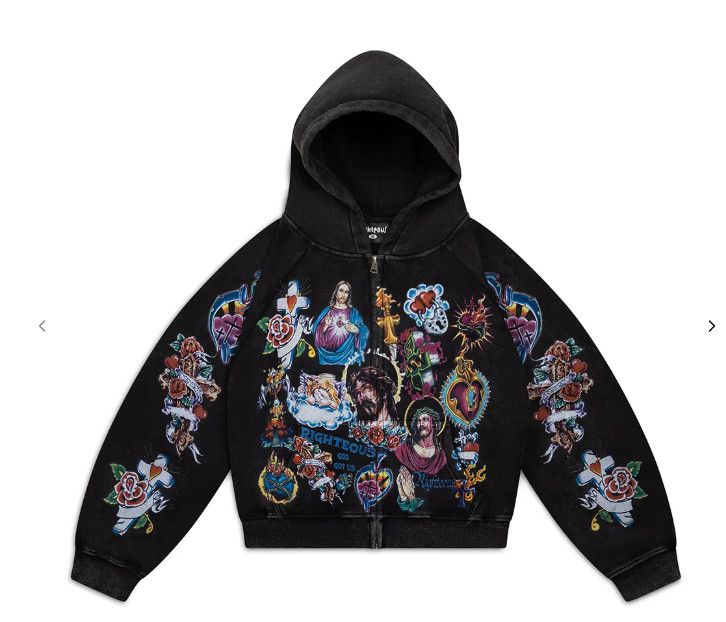
Airflow performance comes down largely to the makeup of the fibers and how tightly the weave is constructed. Compositions weighted toward cotton offer superior air circulation compared to purely synthetic ones, which explains why righteous apparel leans toward cotton-forward compositions for garments designed for daily use, setting aside more technical or performance blends for certain designated categories. This isn’t a one-size-fits-all approach, and that’s deliberate — what a cooler-month hoodie requires isn’t what a warm-weather, lightweight tee calls for.
How well a fabric manages warmth also feeds into the way a garment earns its reputation over the long run. Materials that hold warmth inconsistently often feel unpleasant when the seasons shift, whereas carefully selected blends adapt more smoothly. This is a small but meaningful detail that separates a brand that has tested its materials across seasons from one that hasn’t.
The fabric on its own only partly explains durability — every component must function in unison, from the stitches, seam supports, dye quality, and the hardware on drawstrings or zips.
Righteous clothing brand has built a reputation partly on reinforced double-stitched seams, which reduce the likelihood of unraveling at pressure points.
Though it’s a comparatively modest construction choice, the payoff is remarkable in a garment’s durability through regular wear and washing.
How well dye stays put is yet another underappreciated resilience metric. After 10 to 15 washes, inexpensive dyes lose vibrancy dramatically, leaving garments appearing dull and inconsistent. Superior dyeing processes, notably reactive dyeing methods applied to cotton-based fabrics, retain color considerably longer and fend off the washed-out look that afflicts budget apparel. Time and again, customers reading a righteous review will observe that colors stay rich even after extended everyday use, a sign of this kind of care given to the dyeing process and not mere chance.
The length of the fiber and how well the yarn is made are what determine how well a fabric resists pilling. Smoother yarns, made possible by cotton fibers with a longer staple, stand up to the tiny breakage that is responsible for pilling — while cheaper short fibers pill quickly under abrasion. Undetectable when buying but obviously clear after a month of wear, this detail is exactly why it is so critical to how satisfied you’ll be down the road.
It really is useful to observe the contrast in concrete terms rather than theoretical claims. Below, the table sets out overall traits typical of everyday fast-fashion pieces versus the benchmarks the righteous clothing brand sets out to achieve spanning its core clothing ranges.
| Quality Point | Off-the-rack Fast Fashion | Its Righteous Clothing Method |
|---|---|---|
| Cloth Density | Mostly clocking in below 180 GSM and feeling flimsy | A heavier-leaning fabric weight designed for form plus durability |
| Stitching Structure | A single row of stitching that wears loose over time | Extra-strong seam work layered where strain is highest |
| Dye Durability | Losing vibrancy by 10–15 washes | Reactive dyeing for longer color retention |
| Structural Rebound | Quickly loses its form as it sags out of shape | Fibers blended to enhance how well it recovers after stretching |
| Resistance to Pilling | Balls up noticeably inside just weeks | Featuring extended fibers to keep pilling down |
We’re not talking about dramatic, flashy differences — it’s the type of gradual construction calls that compound over months spent wearing the piece. After the first wash, the difference becomes noticeable, even if a customer comparing two hoodies couldn’t tell right off the bat while sizing up two hoodies side by side; after ten cycles, there’s no missing it any longer.
Quality, no matter how premium, cannot save a garment that’s cared for poorly — which is why correct washing routines are just as critical as the materials themselves. Washing in cold water safeguards both colour vibrancy and fiber integrity far better than warm or hot water, which hastens color loss and fabric degradation. Flipping garments inside out prior to a wash also lessens surface friction, preserving printed graphics and minimizing fabric pilling on the outer face of the fabric.
Opting for natural air-drying, or at the very least a low-heat tumble setting, keeps shrinkage and fabric strain at bay, both of which are caused by high heat over many cycles. This is particularly relevant for heavier fabrics like the ones used in the righteous hoodie, where excessive heat can cause the fleece lining to compress and become less soft over time. Simple habits like these can add a considerable amount of added longevity to a garment, often the difference between a piece holding up for one year versus three.
Keeping garments folded rather than on hangers also helps knitwear and hoodies hold their form, since hanging bulkier garments can stretch the shoulders and neckline over time. Small and unglamorous as these tips are, they’re precisely the practical guidance that transforms a good purchase into a long-term wardrobe staple.
Material choices tell the real story behind any clothing brand, and righteous clothing has clearly shaped its identity around nailing the fundamentals rather than relying on flashy marketing alone. From the weight of the fabric to reinforced stitching to dye retention, each choice reflects a brand focused on how a garment holds up six months or a year down the line, not just how it photographs on day one. This is a notable distinction in a market still overrun by disposable fast fashion.
For anyone considering a we are righteous review before buying, the practical point is simple: the brand’s approach to fabric selection, construction, and final finishing touches reflects genuine attention to durability and comfort, not just aesthetic trends. Whether it’s the comfortable structure of the righteous hoodie or the wider range of righteous apparel, the materials are doing reliable work behind the scenes — which, at the end of the day, is exactly what good clothing should do.


